Skip to content

Burstbytes

  • HOME
  • Blog
  • Categories
  • About Me
  • Contact
    • LinkedIn
  • WireGuard vs OpenVPN: Which VPN Protocol to Use (2026)
    Networking

    WireGuard vs OpenVPN: Which VPN Protocol to Use (2026)

    Julian Burst
    Jul 12, 2026

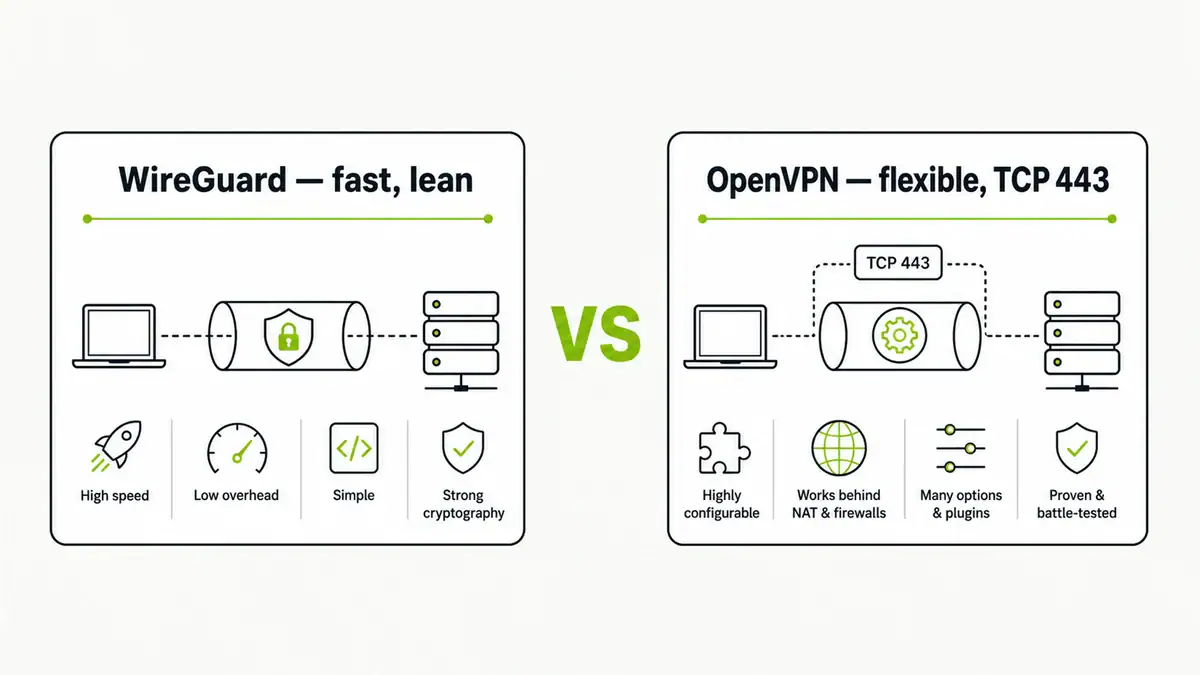
    Updated June 2026. WireGuard and OpenVPN are the two protocols most self-hosted VPNs run on. WireGuard is newer, faster, and simpler; OpenVPN…
    Continue Reading: WireGuard vs OpenVPN: Which VPN Protocol to Use (2026)
  • Tailscale Exit Node: Route All Traffic Through One Device (2026)
    Networking

    Tailscale Exit Node: Route All Traffic Through One Device (2026)

    Julian Burst
    Jul 11, 2026

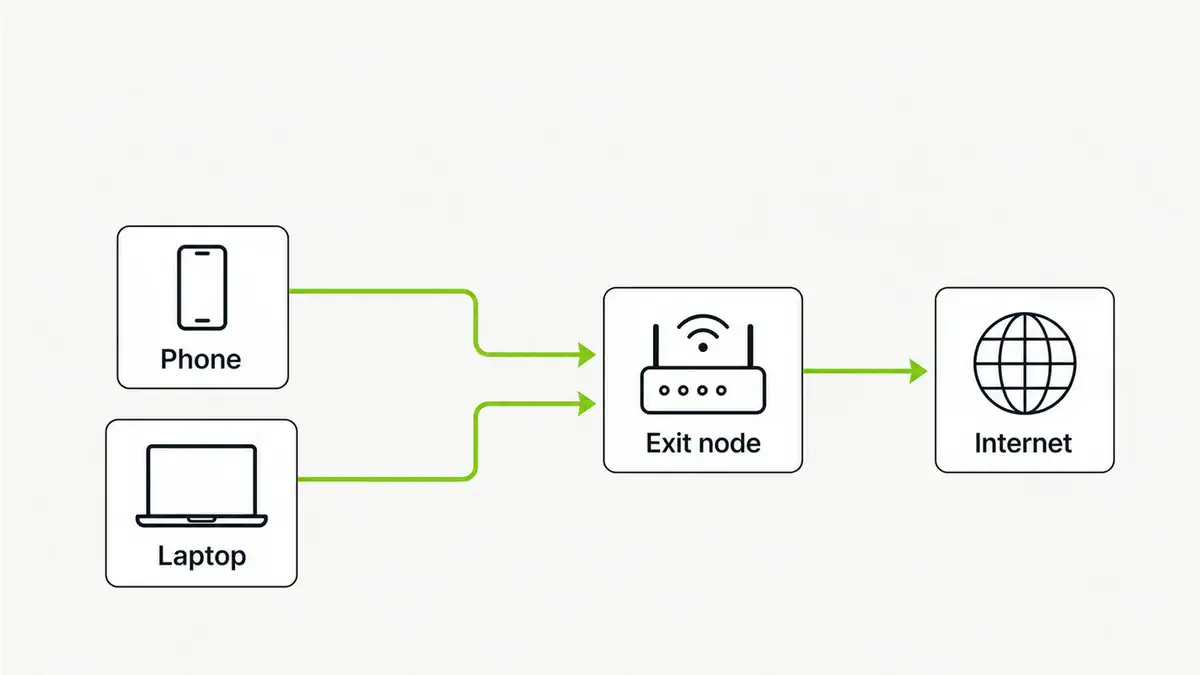
    Updated June 2026. A Tailscale exit node lets your phone or laptop send all its internet traffic through one device on your…
    Continue Reading: Tailscale Exit Node: Route All Traffic Through One Device (2026)
  • How to Set Up WireGuard on a Raspberry Pi (2026)
    Networking

    How to Set Up WireGuard on a Raspberry Pi (2026)

    Julian Burst
    Jul 4, 2026

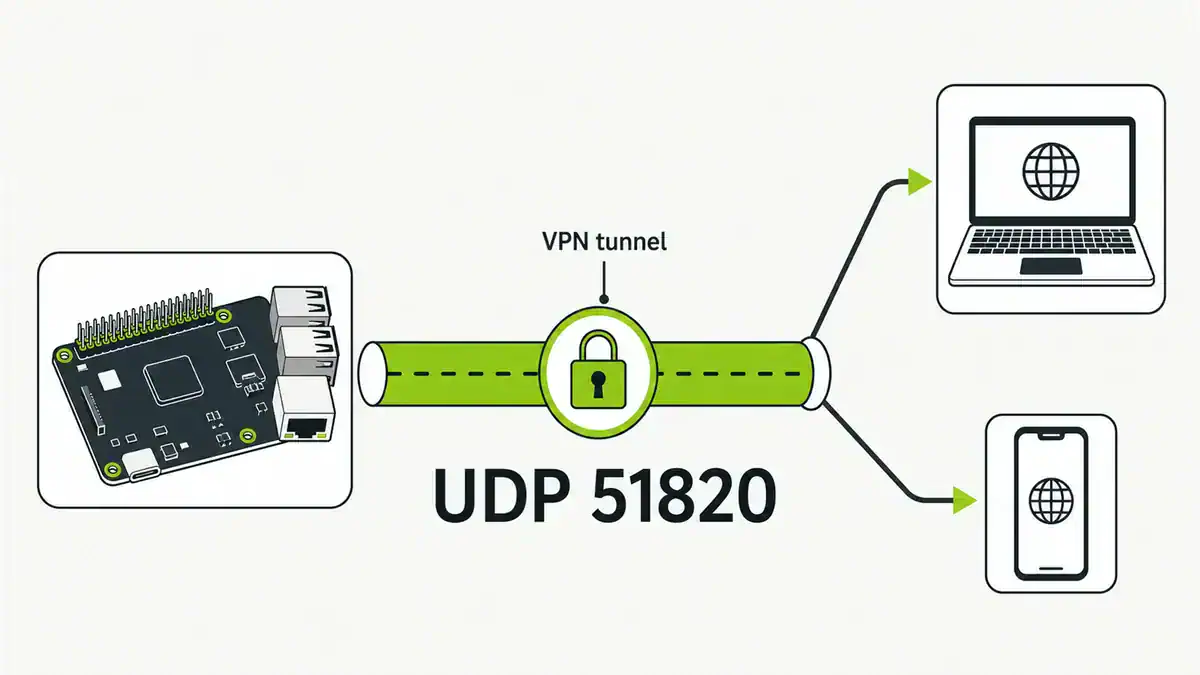
    Updated June 2026. A Raspberry Pi makes a cheap, always-on WireGuard VPN server so you can reach your home network from anywhere.…
    Continue Reading: How to Set Up WireGuard on a Raspberry Pi (2026)
  • VPN Connected but No Internet: How to Fix It (2026)
    Networking

    VPN Connected but No Internet: How to Fix It (2026)

    Julian Burst
    Jun 26, 2026

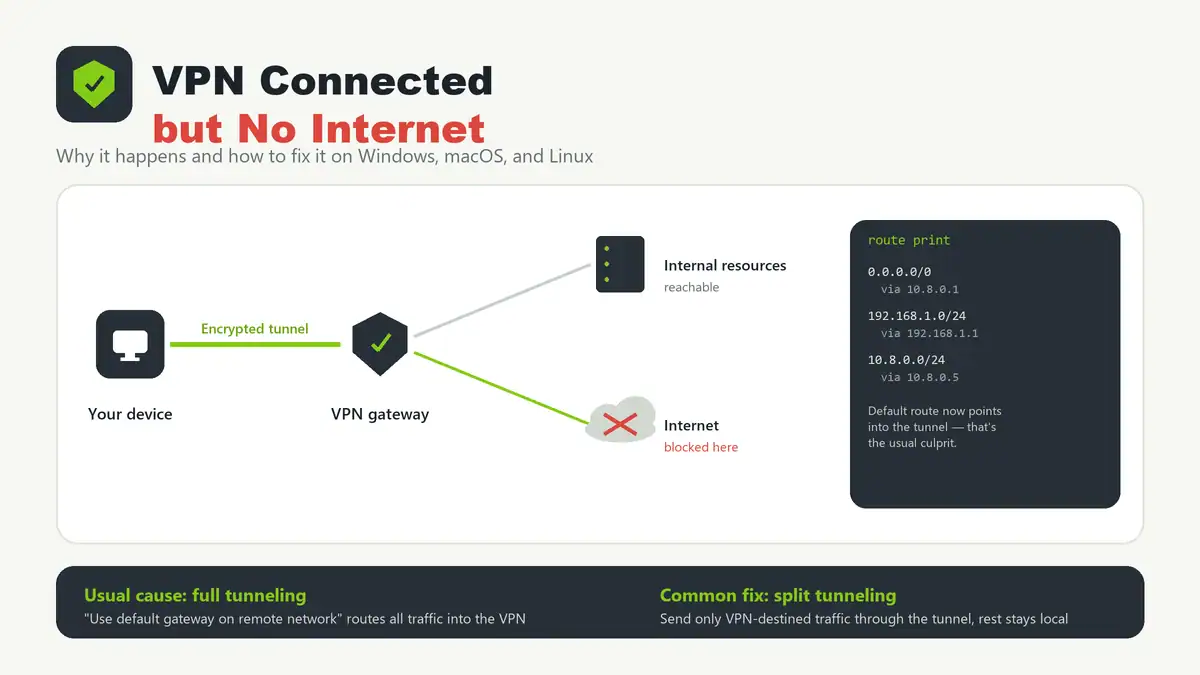
    Updated June 2026. “VPN connected, but no internet” almost always means one thing: your default route got pointed into the VPN tunnel,…
    Continue Reading: VPN Connected but No Internet: How to Fix It (2026)
  • Tailscale vs WireGuard (2026): Which Mesh VPN Should You Use?
    Networking

    Tailscale vs WireGuard (2026): Which Mesh VPN Should You Use?

    Julian Burst
    Jun 26, 2026

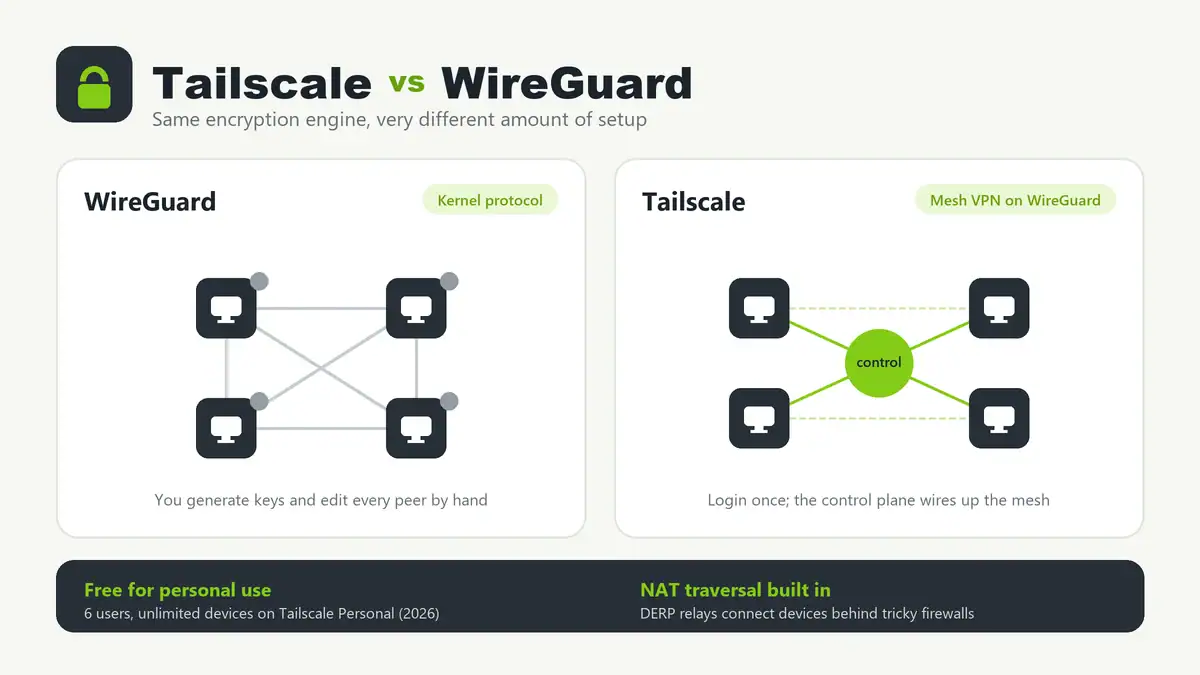
    Updated June 2026. Tailscale and WireGuard are not really rivals: Tailscale is built on top of WireGuard. WireGuard is the fast, modern…
    Continue Reading: Tailscale vs WireGuard (2026): Which Mesh VPN Should You Use?
  • Best Public DNS Providers for 2026: Speed, Privacy, and How to Set Them Up
    Labs, Networking, VPN

    Best Public DNS Providers for 2026: Speed, Privacy, and How to Set Them Up

    Julian Burst
    Jun 17, 2026

    Updated June 2026: the best public DNS provider depends on what you want from DNS. Use Cloudflare or Google when you want…
    Continue Reading: Best Public DNS Providers for 2026: Speed, Privacy, and How to Set Them Up
  • VPN Tunnel Up but No Traffic: How to Fix IPsec Routing Issues
    Linux, Networking, VPN

    VPN Tunnel Up but No Traffic: How to Fix IPsec Routing Issues

    Julian Burst
    Dec 22, 2025

    The tunnel shows established. IKE negotiation completed successfully. Phase 2 is up on both sides. But ping fails, and nothing is getting…
    Continue Reading: VPN Tunnel Up but No Traffic: How to Fix IPsec Routing Issues
  • How to form a BGP over IPsec tunnel using BIRD and Strongswan
    Labs, Linux, Networking, VPN

    How to form a BGP over IPsec tunnel using BIRD and Strongswan

    Julian Burst
    Aug 11, 2025

    Route based VPNs are becoming more and more common, and it’s important to know how to configure an eBGP peer over an…
    Continue Reading: How to form a BGP over IPsec tunnel using BIRD and Strongswan
  • How to form an eBGP peer with Cisco Meraki and a Raspberry Pi using the BIRD Routing Daemon
    Cisco, Labs, VPN

    How to form an eBGP peer with Cisco Meraki and a Raspberry Pi using the BIRD Routing Daemon

    Julian Burst
    Jul 29, 2025

    This post will show you how to form an eBGP relationship between a Cisco Meraki MX and a Raspberry Pi. For this…

    Continue Reading: How to form an eBGP peer with Cisco Meraki and a Raspberry Pi using the BIRD Routing Daemon
  • How to Install and Configure the BIRD Routing Daemon (BGP) on Raspberry Pi OS
    Labs, VPN

    How to Install and Configure the BIRD Routing Daemon (BGP) on Raspberry Pi OS

    Julian Burst
    Jul 15, 2025

    This post is here to teach you how to install the BIRD routing daemon on Raspberry Pi OS. These instructions will also…
    Continue Reading: How to Install and Configure the BIRD Routing Daemon (BGP) on Raspberry Pi OS
1 2
Next Page

Latest Posts

  • DHCP vs Static IP: When to Use Each (2026)

    DHCP vs Static IP: When to Use Each (2026)

    Jul 13, 2026
  • WireGuard vs OpenVPN: Which VPN Protocol to Use (2026)

    WireGuard vs OpenVPN: Which VPN Protocol to Use (2026)

    Jul 12, 2026
  • Tailscale Exit Node: Route All Traffic Through One Device (2026)

    Tailscale Exit Node: Route All Traffic Through One Device (2026)

    Jul 11, 2026
  • Best DNS Servers for Gaming (2026)

    Best DNS Servers for Gaming (2026)

    Jul 10, 2026
  • AdGuard Home on Raspberry Pi: Install and Configure (2026)

    AdGuard Home on Raspberry Pi: Install and Configure (2026)

    Jul 9, 2026

categories

  • Cisco (2)
  • Labs (9)
  • Linux (7)
  • Networking (29)
  • VPN (10)

Burstbytes

Breaking down intimidating concepts into byte sized posts.

Covering predominantly Enterprise Networking, Labbing, and Linux.

Privacy Policy, Cookie Policy, Terms of Use, Disclaimer

Subscribe to my Blog!

Get notified whenever I post something new. No spam, and it helps a lot!

Thank you! Please check your email to confirm your subscription.

Tags

CGNAT Cisco DNS Firewall Labs Linux macOS NAT Networking Port Forwarding Router Troubleshooting VPN Windows

©2026 Burstbytes.

Manage Consent
To provide the best experiences, we use technologies like cookies to store and/or access device information. Consenting to these technologies will allow us to process data such as browsing behavior or unique IDs on this site. Not consenting or withdrawing consent, may adversely affect certain features and functions.
Functional Always active
The technical storage or access is strictly necessary for the legitimate purpose of enabling the use of a specific service explicitly requested by the subscriber or user, or for the sole purpose of carrying out the transmission of a communication over an electronic communications network.
Preferences
The technical storage or access is necessary for the legitimate purpose of storing preferences that are not requested by the subscriber or user.
Statistics
The technical storage or access that is used exclusively for statistical purposes. The technical storage or access that is used exclusively for anonymous statistical purposes. Without a subpoena, voluntary compliance on the part of your Internet Service Provider, or additional records from a third party, information stored or retrieved for this purpose alone cannot usually be used to identify you.
Marketing
The technical storage or access is required to create user profiles to send advertising, or to track the user on a website or across several websites for similar marketing purposes.
  • Manage options
  • Manage services
  • Cookie Policy
  • Privacy Policy
  • Terms of Use
Manage Consent
To provide the best experiences, we use technologies like cookies to store and/or access device information. Consenting to these technologies will allow us to process data such as browsing behavior or unique IDs on this site. Not consenting or withdrawing consent, may adversely affect certain features and functions.
Functional Always active
The technical storage or access is strictly necessary for the legitimate purpose of enabling the use of a specific service explicitly requested by the subscriber or user, or for the sole purpose of carrying out the transmission of a communication over an electronic communications network.
Preferences
The technical storage or access is necessary for the legitimate purpose of storing preferences that are not requested by the subscriber or user.
Statistics
The technical storage or access that is used exclusively for statistical purposes. The technical storage or access that is used exclusively for anonymous statistical purposes. Without a subpoena, voluntary compliance on the part of your Internet Service Provider, or additional records from a third party, information stored or retrieved for this purpose alone cannot usually be used to identify you.
Marketing
The technical storage or access is required to create user profiles to send advertising, or to track the user on a website or across several websites for similar marketing purposes.
  • Manage options
  • Manage services
  • Cookie Policy
  • Privacy Policy
  • Terms of Use